In Quebec, winter puts vehicles through a serious test. Between snow, salt, calcium, and humidity, all the conditions are in place to encourage rust formation. Even newer vehicles are not spared, as their design includes several vulnerable areas where water and contaminants can seep in.
Rust forms when metal comes into contact with water and oxygen. This process is made worse by the abrasives used on winter roads, such as salt and calcium, which increase the conductivity of water and accelerate corrosion. Temperature fluctuations — particularly between the cold outside and the warmth of a garage, also contribute to the problem by allowing moisture to penetrate vehicle components.
One of the most problematic aspects of rust is that it is often invisible in its early stages. It develops quietly in hard-to-reach areas, such as doors, the hood, or the rocker panels, before becoming visible. Once rust progresses, it can lead to costly repairs, compromise vehicle safety, and significantly reduce resale value.
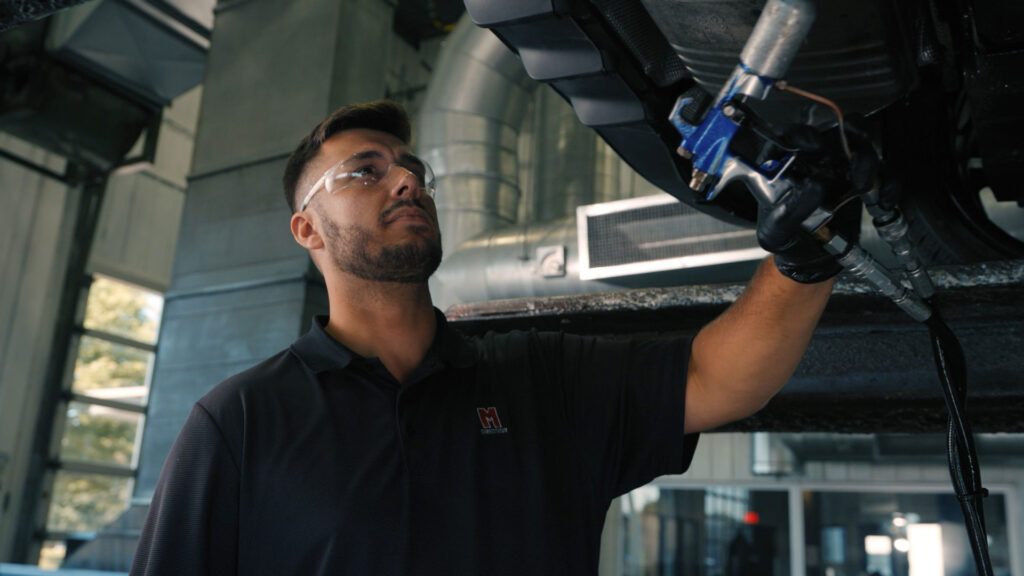
To counter these effects, a complete annual rust-proofing treatment remains one of the most effective solutions. It acts as a protective barrier against moisture and contaminants, while also slowing the progression of existing rust. In a climate as demanding as Quebec’s, it is recommended to renew this treatment every 12 months in order to maintain its effectiveness.
Getting an annual rust-proofing treatment on your vehicle not only extends its lifespan, but also preserves its appearance and long-term value. A simple preventive step that helps you face the harsh winter conditions with confidence, it’s a smart and worthwhile investment!